How to Handle Odors, Health Risks, and Cleanup Safely
Dead animal removal for attics and basements is the process of finding, removing, and cleaning up after a deceased animal inside your home. Acting fast helps stop strong odors, insect problems, and health risks. The right steps depend on where the animal is, how long it has been there, and how easy it is to reach. In many cases, safe removal and full cleanup are better left to trained crews.
Quick Diagnosis Summary
If you smell a sharp, rotting odor that gets worse each day, you may have a dead animal in your attic or basement. Flies gathering near vents or windows are another clear sign. You might also see stains on ceilings or hear buzzing in the walls. Dead animal removal is needed as soon as possible to limit damage and reduce health concerns.
Common Symptoms
Homeowners often notice the problem before they see it. Watch for these warning signs:
- Strong, sour smell that spreads through the house
- Flies or maggots near light fixtures or vents
- Stains forming on walls or ceilings
- Sudden spike in indoor pests
- Pets scratching at a wall or floor area
Attics and basements are common nesting spots for raccoons, squirrels, rats, and opossums. If one gets trapped or sick, it may die in a hidden corner.
Likely Causes
Animals enter homes through small gaps in roofs, soffits, vents, and foundations. In colder months, they look for warmth. In spring, they look for nesting space. Once inside, they may become trapped or poisoned. Some die from injuries caused by other animals.
In basements, flooded window wells and uncovered vents allow animals to slip in. In attics, loose shingles or damaged vents are common entry points. After the animal dies, the body begins to break down. This process causes odor, fluid leaks, and bacteria growth. That is why dead animal removal should never be ignored.
What to Check First
Before taking action, do a quick but careful inspection:
- Follow the odor trail to narrow down the area.
- Look for fly activity near specific walls or corners.
- Check attic insulation for disturbed spots.
- Use a flashlight to scan basement edges and crawl spaces.
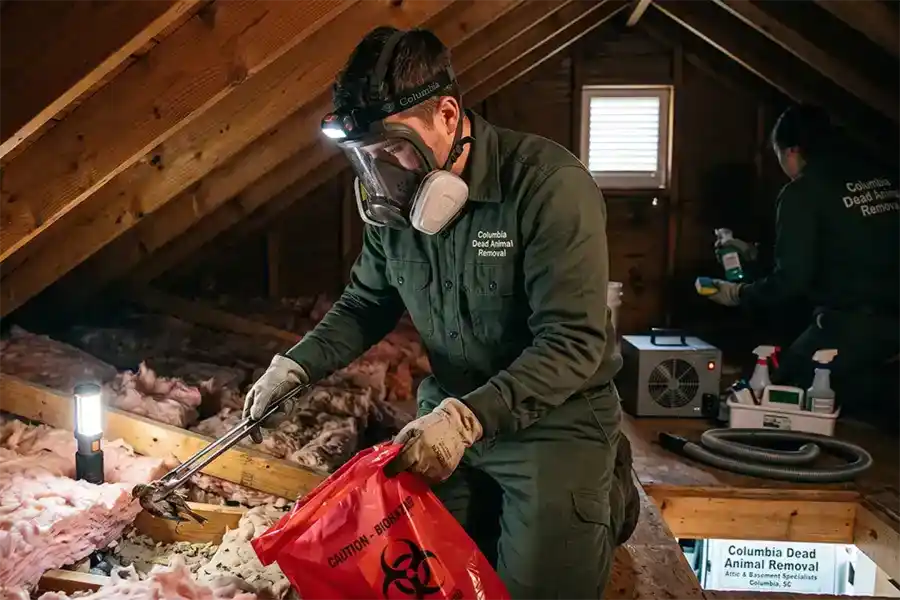
Always wear gloves, long sleeves, and a mask if you attempt to inspect the area. Avoid direct contact with the animal or fluids. If the carcass is inside a wall, cutting into drywall may be needed, which adds repair work later.
Safe Fixes Vs Pro-Level Fixes
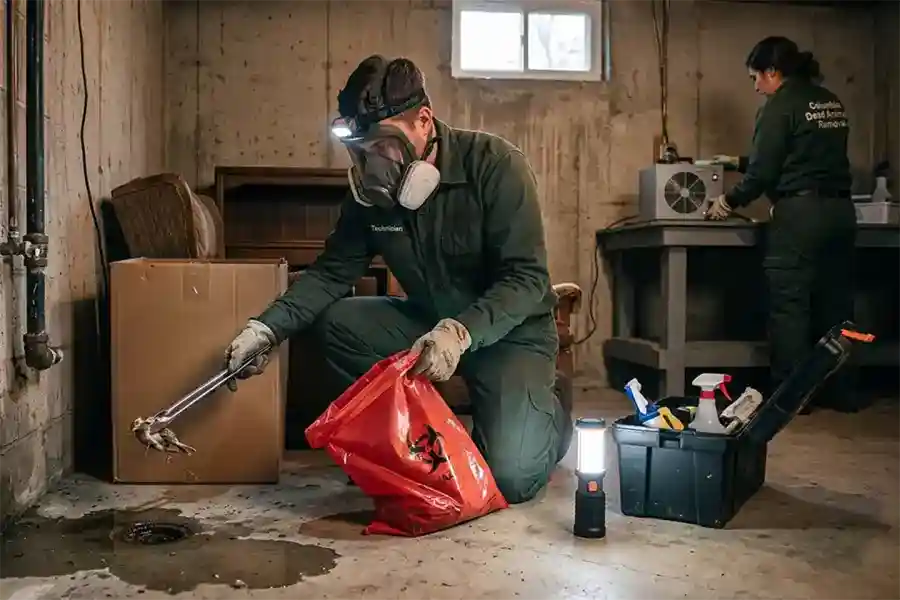
In some cases, a small animal in an open basement area can be removed using protective gear and double trash bags. The area should then be cleaned with a disinfectant made for biohazard cleanup. Soiled materials like insulation or carpet padding may need removal.
Pro-level fixes are often required when:
- The animal is inside a wall or ceiling cavity
- The odor has spread through HVAC systems
- Fluids have soaked into insulation or wood
- There is risk of disease from raccoons or rodents
Professional dead animal removal includes locating the exact source, removing contaminated materials, applying odor neutralizers, and sealing entry points. Trained teams also know how to handle wildlife safely and in line with local rules.
Prevention Tips
Once cleanup is complete, focus on keeping animals out for good. Preventing repeat problems saves time and stress.
- Seal all roof gaps and vent openings with proper covers
- Repair damaged soffits and fascia boards
- Install chimney caps and vent screens
- Keep trash sealed and away from the home
- Trim tree branches near the roofline
Routine inspections of attics and basements can also catch early signs of animal activity. If you hear scratching or notice droppings, act before the issue grows. Quick action reduces the chance that dead animal removal will be needed again.
Call for Help in Columbia, SC
If you notice strong odors or signs of a dead animal in your attic or basement, do not wait for the problem to spread. Our team at Watford's Wildlife Trapping Of Columbia handles dead animal removal safely and completely. We serve homeowners throughout Columbia, SC and nearby areas. Call (803) 570-8095 today, and we will remove the animal, clean the space, and help protect your home from future wildlife issues.